
A little mouse with wonderfully big ears
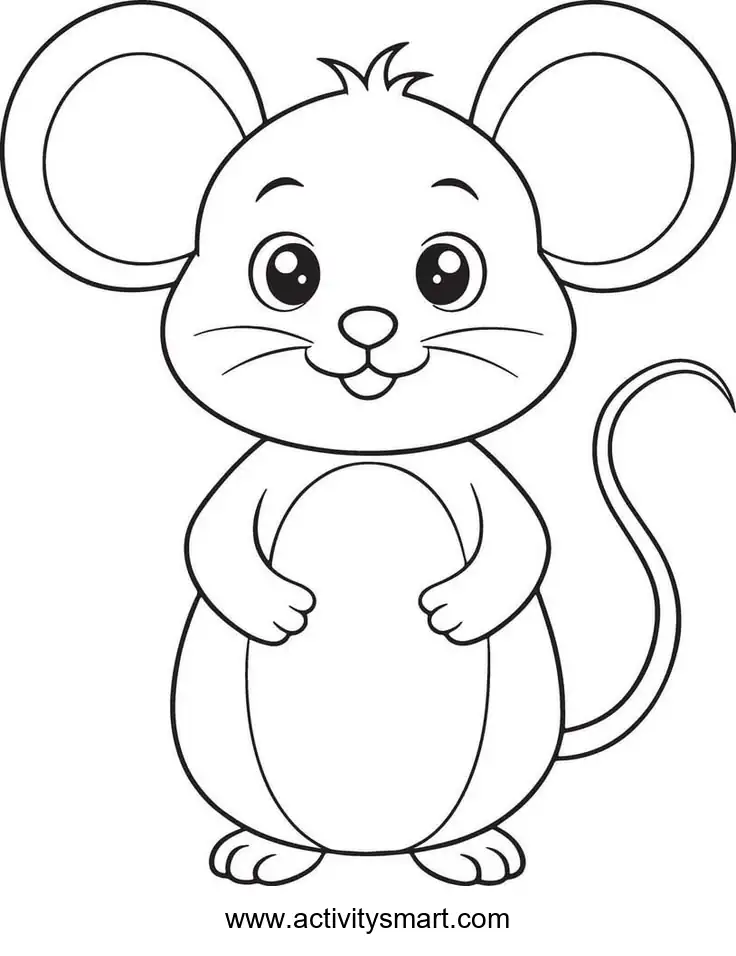
Download this big-eared baby mouse coloring page featuring a smiling cartoon mouse with round ears, whiskers, a large belly panel and a curling tail. Print the original picture and explore five creative activities inspired by its simple shapes.
More Coloring Pages
Dinosaur Holding a Flower Coloring Page
A smiling long-necked dinosaur holds a large flower. Open the printable image and try a picture-specific coloring activity.
View printable
Spotted Gecko Coloring Page
A small spotted gecko has splayed toes and a curved tail. Open the printable image and try a…
View printable
Duck with Glasses and a Head Scarf Coloring Page
A duck wears round glasses and a tied head scarf. Open the printable image and try a picture-specific…
View printable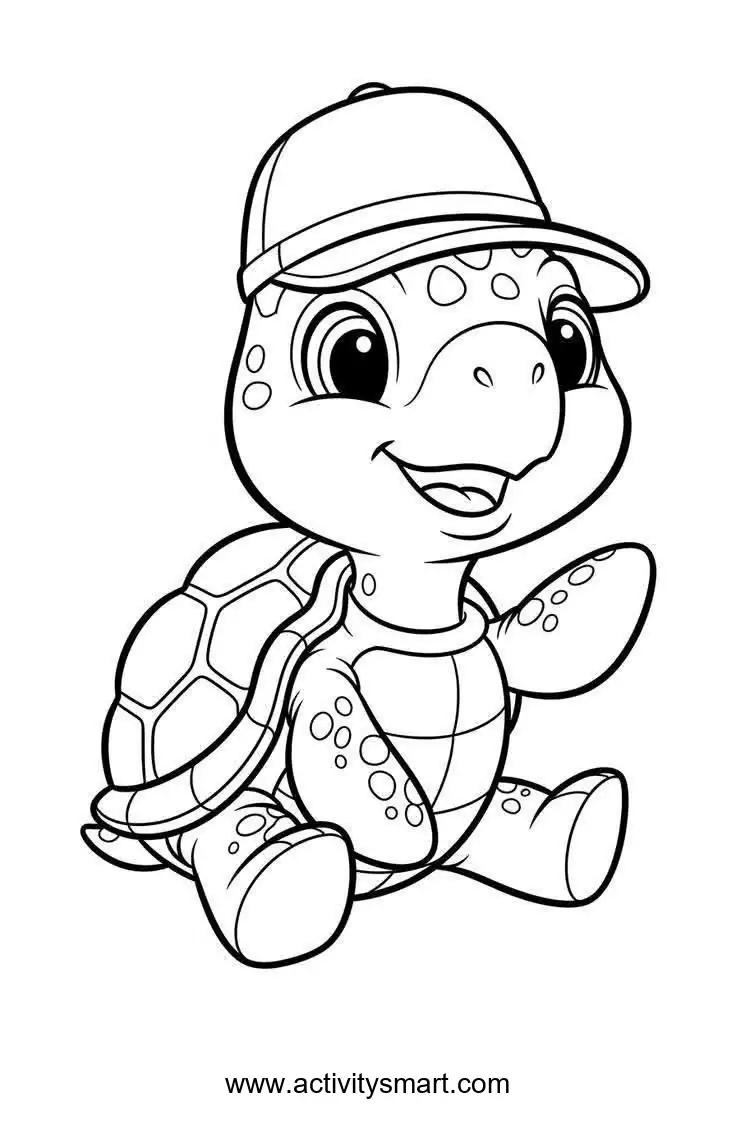
Turtle in a Cap Coloring Page
A smiling turtle wears a baseball cap and raises one front leg. Open the printable image and try…
View printable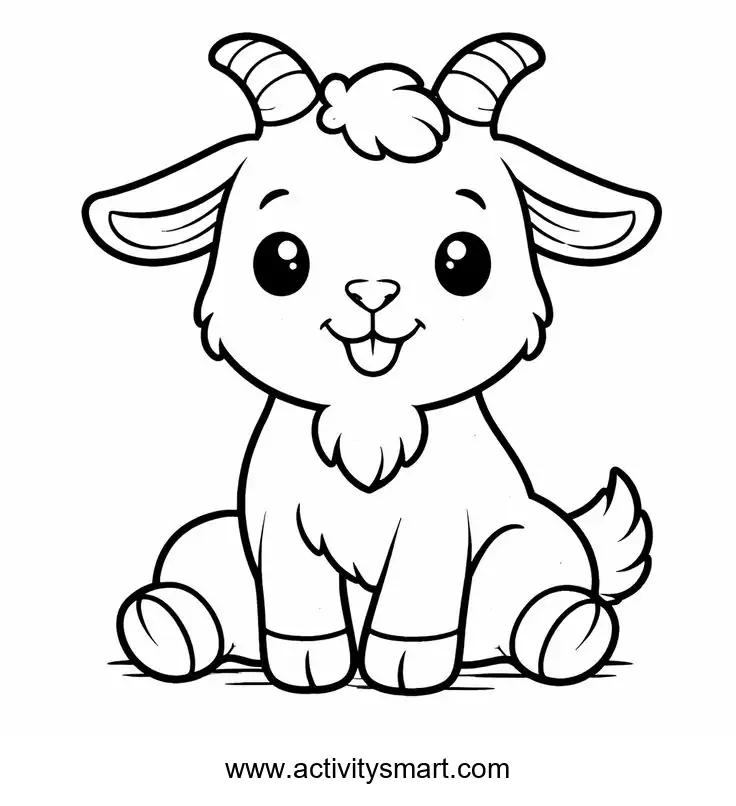
Baby Goat with a Bow Coloring Page
A seated baby goat has small horns, floppy ears and a bow. Open the printable image and try…
View printable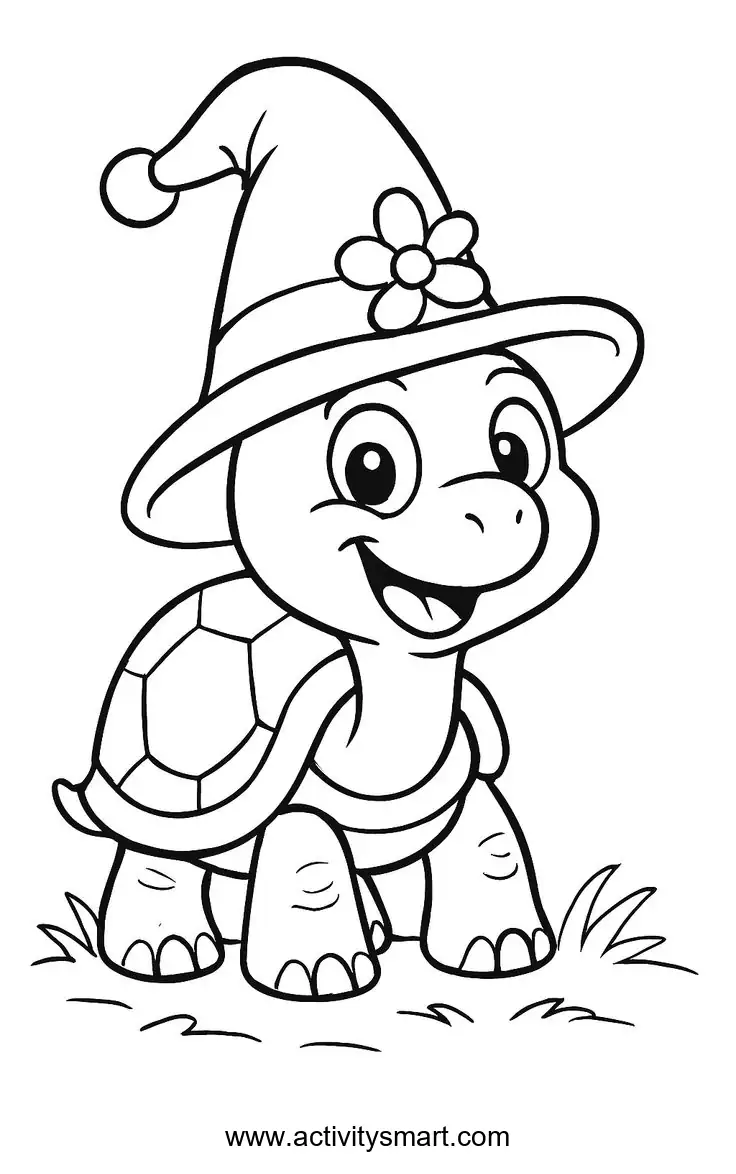
Turtle in a Wizard Hat Coloring Page
A smiling turtle wears a pointed hat decorated with a flower. Open the printable image and try a…
View printableBig-Eared Baby Mouse Coloring Page
A smiling mouse sits with large round ears and a curling tail. Open the printable image and try…
View printable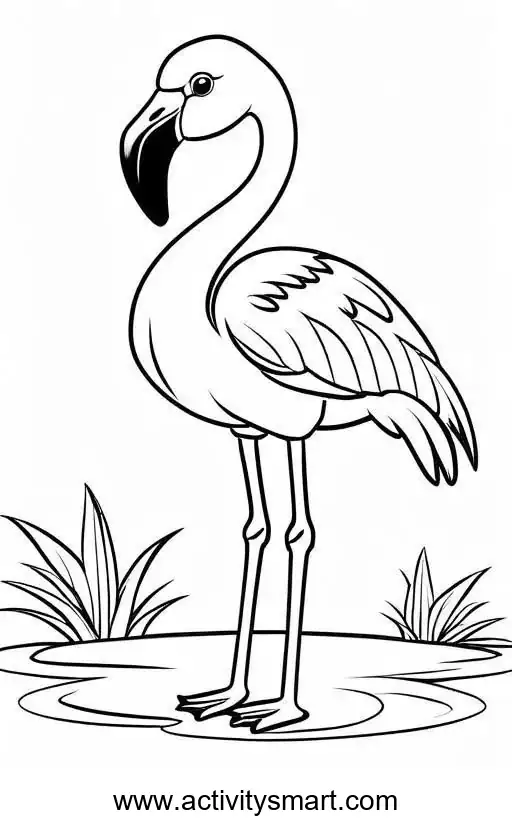
Flamingo beside the Water Coloring Page
A flamingo stands in shallow water beside reeds. Open the printable image and try a picture-specific coloring activity.
View printableWhat is on this big-eared baby mouse coloring page?
A single cartoon mouse faces forward against a white background. Its oversized round ears have separate inner outlines, creating broad spaces for contrasting colors. A small tuft of hair sits above the forehead, while dark eyes, raised eyebrows and a smiling mouth give the character a cheerful expression.
Whiskers extend from either side of the muzzle. The mouse holds its small front paws beside a large outlined belly panel, with two feet below. A long narrow tail rises along the right side and curls toward the top. The website name appears beneath the character.
Begin by looking at the whole drawing together. Ask which detail your child noticed first: the ears, smile, paws or tail. They can choose that feature as a starting point, rather than working through every part in a fixed order.
Five creative activities for your little mouse
1. Choose a soft body and lighter belly
Try light gray or warm brown on the head and body, then leave the belly white or add a gentle cream shade. Test the pencil on spare paper first so your child can see how light pressure changes the finished color.
Work around the whiskers and facial outlines slowly. The dark eyes already contain white highlights; leaving those spaces uncovered preserves the original expression. An imaginative purple, blue or pink mouse is another creative option.
2. Make the big ears stand out
Choose a second color for the inner ears. Pale pink against a gray body offers one combination, while peach and light brown create a warmer palette. The outer ear sections can match the body.
Your child can color both ears alike or give each a different shade. Compare the broad inner spaces with the narrower outer bands. Short strokes near the edges can help keep the drawn divisions visible.
3. Follow the tail and small paw details
Use a colored pencil for the narrow tail, beginning at its base and following the curve a little at a time. A shade that matches the inner ears can connect the smaller details across the picture.
Move to the front paws and feet when your child is ready. Follow the short toe and finger lines gently rather than covering them with heavy marks. The body and belly can wait while these smaller spaces receive attention.
4. Compare circles, curves and sizes
Look for rounded shapes in the ears, eyes and belly. Ask your child to point to one large rounded shape and one smaller shape. There is no need to turn the activity into a test of formal shape names.
Follow the tail’s curve with a finger held just above the paper, then compare it with the shorter whisker lines. Find the two ears, two front paws and two feet, pointing to each once while counting the pairs.
5. Give the mouse a name and a story
Ask what the mouse might be smiling about. Perhaps it has heard a funny story, met a friend or discovered a new place to explore. These are invented ideas inspired by the character, rather than events established by the drawing.
Let your child choose a name and describe what happens next. An adult can write a dictated caption on a separate sheet. Display it beside the finished picture or keep both in an activity folder.
For an optional extension, your child can add a small invented decoration inside the belly panel, such as dots, a heart or a simple flower. Explain that these details are additions to the original picture.
Start with three shades: choose one body color, one inner-ear color and one lighter belly shade. Add more colors only when your child wants another detail.
How to save and print the baby mouse picture
- Select Download Coloring Image to access the original WebP file. If it opens in your browser, use its save-image option.
- Select Print Coloring Page to use the site’s image-printing tool. If it is unavailable, open the full-size image and print from your browser.
- Choose portrait orientation and A4 or US Letter paper. Use fit-to-page scaling to preserve the original proportions.
- Check that both ears, the tail, feet and website name remain visible before printing.
The original image measures 736 × 956 pixels. Its proportions differ from A4 and US Letter paper, so some white space is expected. Avoid stretching the character or using a fill setting that clips the ears or tail.
Enlarging the file does not add detail and can soften the outlines. A smaller centered print may look clearer than a page-filling version. Print one test copy before preparing several sheets for an activity.
Crayons suit the broad belly, head and ear spaces. Colored pencils offer control around the whiskers, paws and narrow tail. Test markers on spare paper and place a protective sheet underneath. Use paper supported by your printer.
For another single-character animal activity, try the sitting baby giraffe coloring page. Compare its long neck with this mouse’s large ears, or browse more coloring pages for a different subject.
Questions about this baby mouse coloring page
What appears in the baby mouse picture?
The illustration shows one smiling cartoon mouse with large round ears, whiskers, small front paws, an outlined belly, two feet and a curling tail.
What file does Download Coloring Image provide?
It provides the original WebP image measuring 736 × 956 pixels. This image download is not a PDF.
Can I print the mouse on A4 or US Letter paper?
Yes. Choose portrait orientation and fit-to-page scaling. Check that both ears, the tail, feet and website name remain visible without stretching or cropping the image.
Which colors can I use for the mouse?
Try a light gray or brown body with pale pink inner ears and a lighter belly. Imaginative colors such as blue, purple or pink also work for this cartoon character.
Can my child decorate the belly panel?
Yes. Your child can add invented details such as dots, a heart or a simple flower inside the outlined belly panel. These decorations are additions to the original picture.