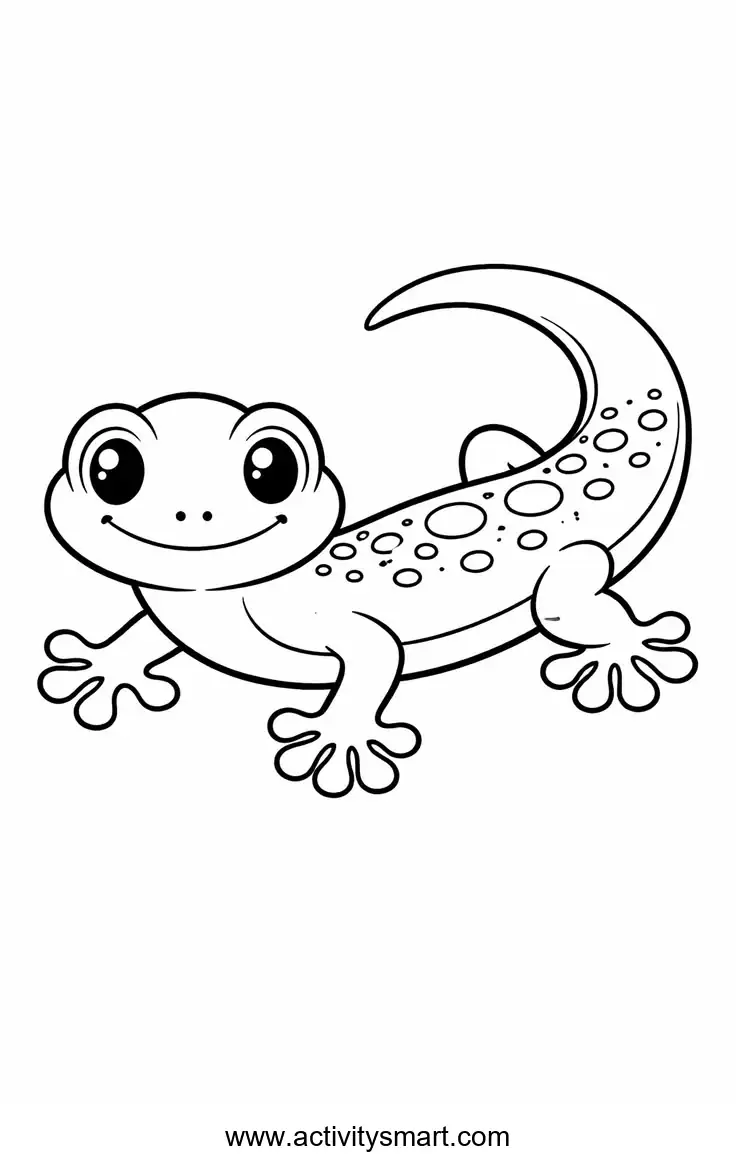
A smiling gecko with a playful spotted tail
Download this spotted gecko coloring page featuring a cheerful cartoon gecko with large eyes, rounded spots, splayed toes and a long curved tail. Print the original picture and explore five creative ideas for its colors and patterns.
More Coloring Pages
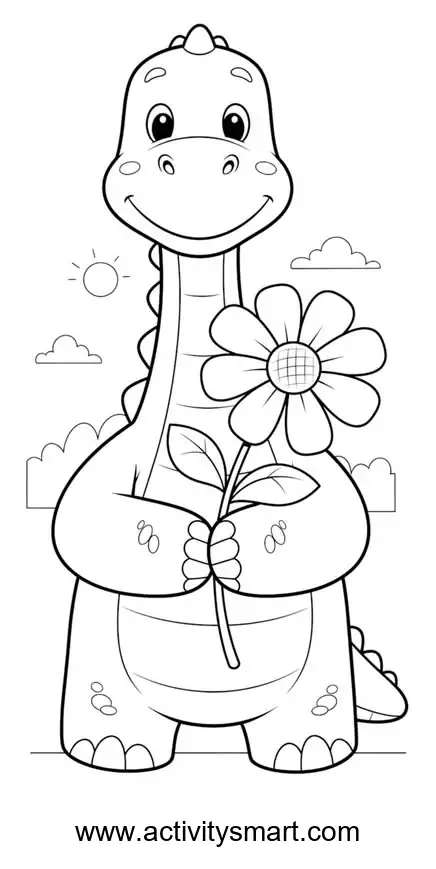
Dinosaur Holding a Flower Coloring Page
A smiling long-necked dinosaur holds a large flower. Open the printable image and try a picture-specific coloring activity.
View printable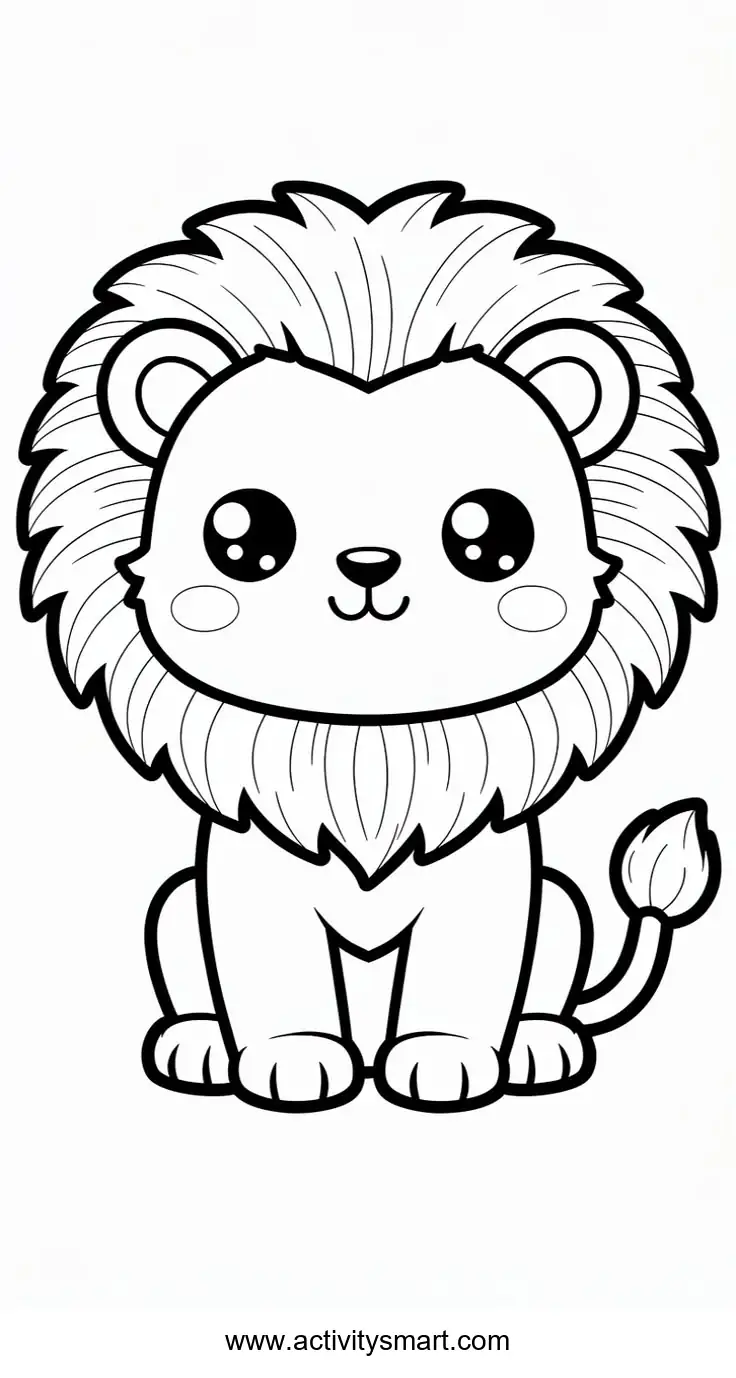
Round-Maned Lion Cub Coloring Page
A lion cub sits inside a large rounded mane. Open the printable image and try a picture-specific coloring…
View printable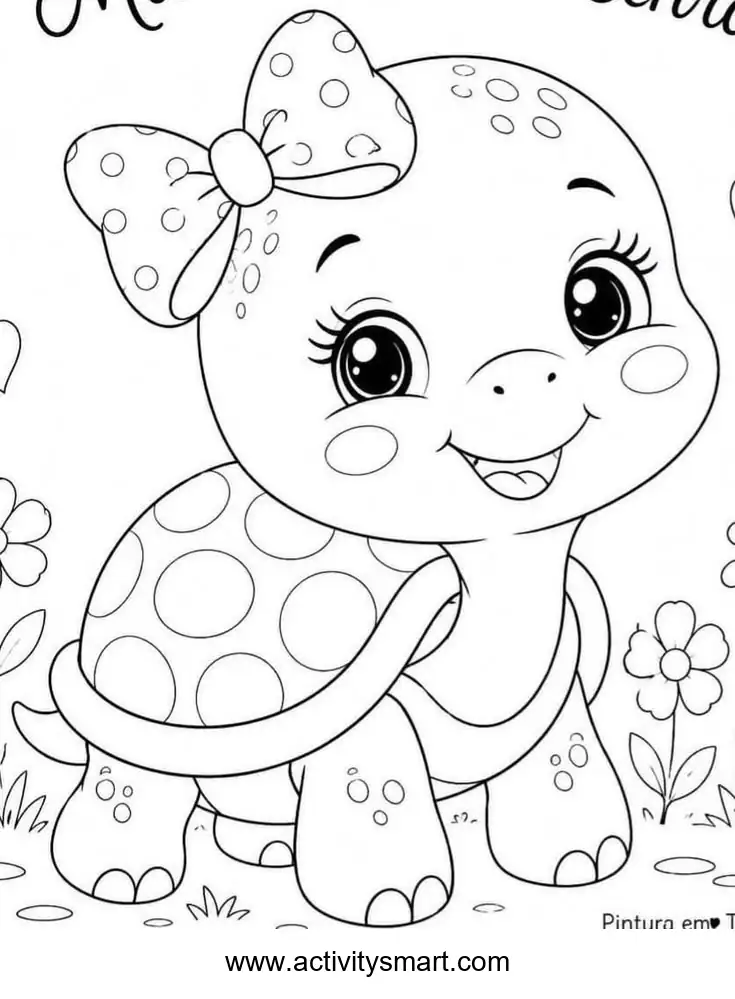
Turtle with a Bow Coloring Page
A smiling turtle wears a large bow beside flowers. Open the printable image and try a picture-specific coloring…
View printable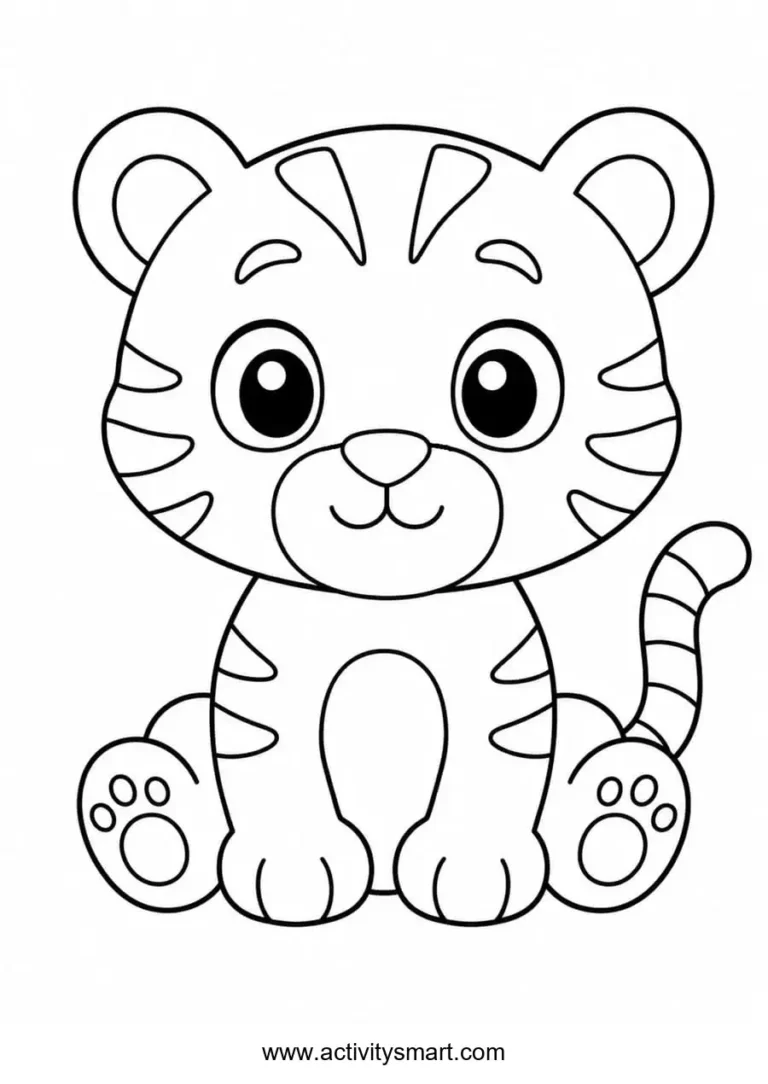
Sitting Tiger Cub Coloring Page
A round-faced tiger cub sits with bold stripes and a small smile. Open the printable image and try…
View printableSpotted Gecko Coloring Page
A small spotted gecko has splayed toes and a curved tail. Open the printable image and try a…
View printable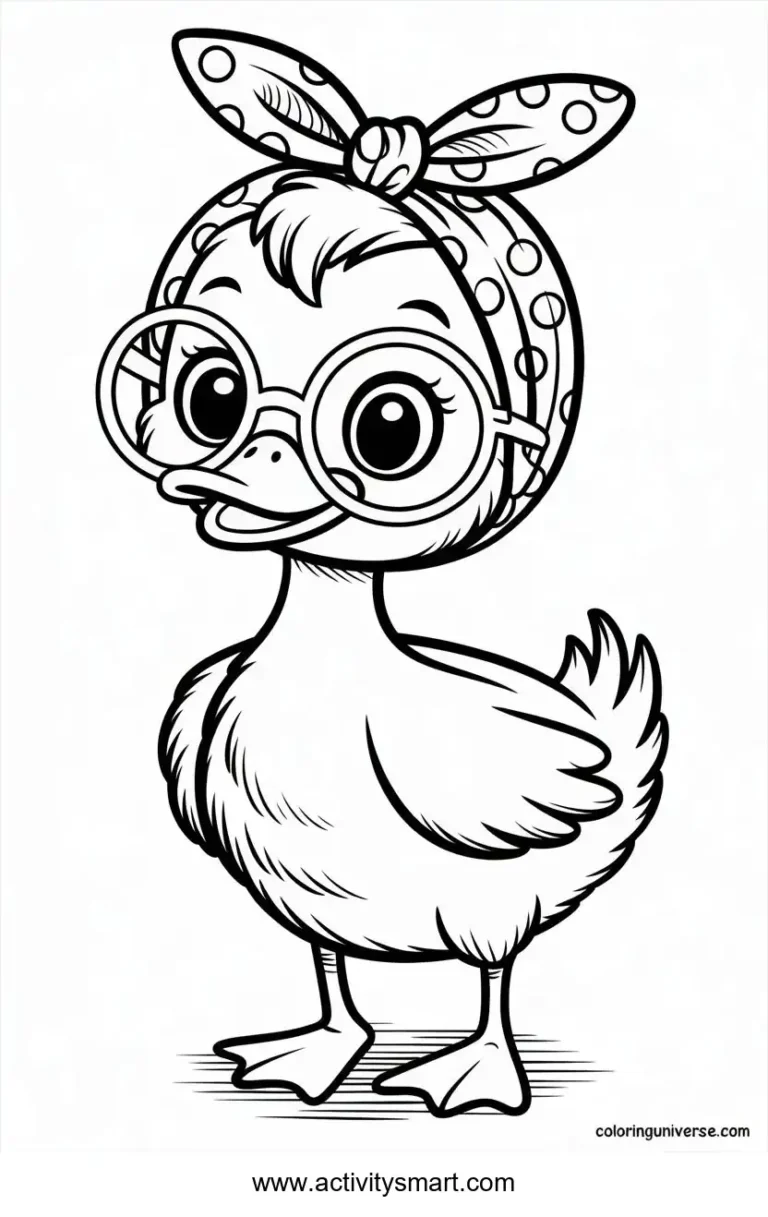
Duck with Glasses and a Head Scarf Coloring Page
A duck wears round glasses and a tied head scarf. Open the printable image and try a picture-specific…
View printable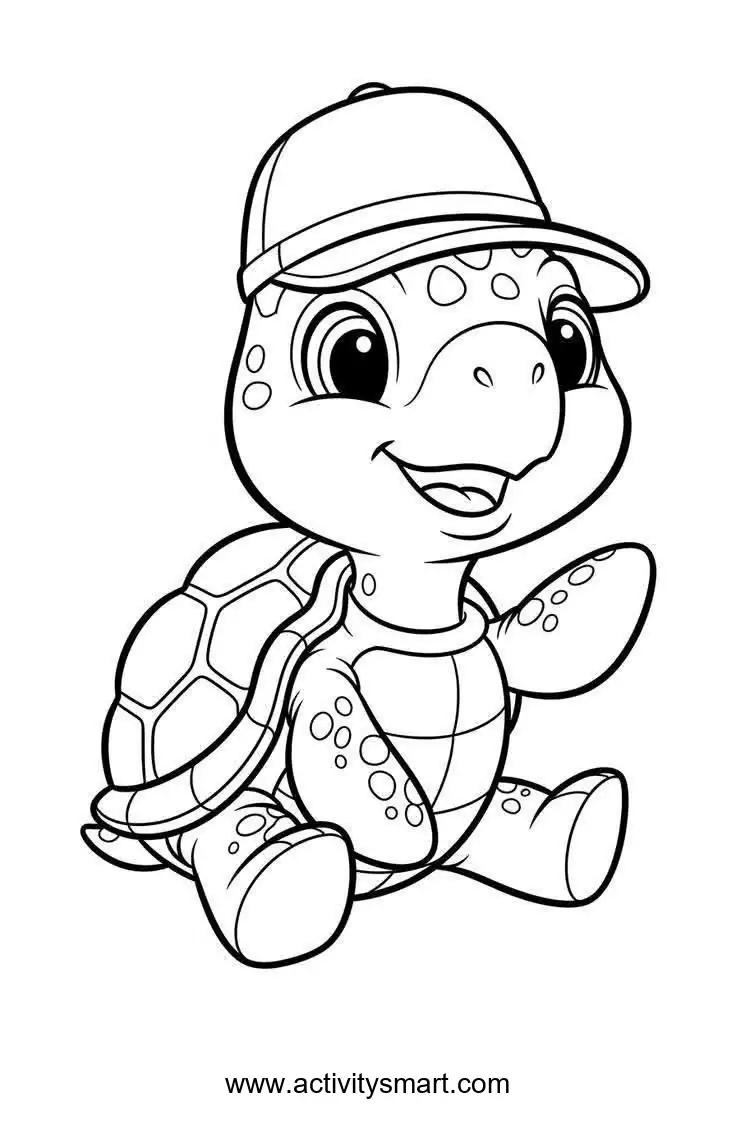
Turtle in a Cap Coloring Page
A smiling turtle wears a baseball cap and raises one front leg. Open the printable image and try…
View printable
Baby Goat with a Bow Coloring Page
A seated baby goat has small horns, floppy ears and a bow. Open the printable image and try…
View printableWhat is on this spotted gecko coloring page?
A smiling cartoon gecko faces forward against a mostly white background. Its rounded head has two large dark eyes with white highlights, two small nostrils and a long curved smile. The body extends toward the right, where a long tail curves upward and back over it.
Rounded spots of different sizes follow the gecko’s back and continue along part of its tail. Its visible feet have toes that spread outward. A curved line underneath the body separates the belly area from the back. The website name appears below the illustration.
Before choosing pencils, invite your child to find a large spot and a smaller one. Follow the tail’s curve with a finger held just above the paper, then choose a favorite part of the drawing to color first. This is a playful cartoon and does not identify a particular gecko species.
Five creative ideas for your spotted gecko
1. Choose a light body and contrasting spots
Pick a light shade for the gecko’s body and a stronger color for its outlined spots. Pale yellow with brown spots offers one combination; light green with purple spots creates a more imaginative version. Test both colors on spare paper before filling the larger areas.
Color the spots first or work around them with the body color. Use light pressure near the black outlines so the individual shapes remain visible. Your child can leave some spots white and return to them later.
2. Make a pattern along the curved tail
Follow the long tail from its base toward the pointed end. Choose two spot colors and alternate between them along the visible outlined markings. Another option is to repeat the same color across the back and tail for a coordinated look.
The tip of the tail has a broad unspotted area. It can match the body, receive a separate shade or stay white. If your child adds stripes or dots there, explain that these are new decorations added to the original illustration.
3. Give the face and feet gentle colors
Choose a light color for the face so the eyes, nostrils and smile remain easy to see. The eyes are already dark with small white highlights. Work around those highlights instead of filling them with a heavy color.
Use a colored pencil around the spread toes. The feet can match the body or receive a darker shade. Compare the curved toes on the left with those on the right, and let your child decide whether the feet should match.
4. Compare spots, sizes and curves
Look for one large outlined spot on the gecko’s back, then find a smaller spot nearby. Ask your child to point to the difference. Some markings are rounder and others are more oval; there is no need to name every shape.
Choose a small group of spots and count them by pointing to each one once. Then follow the outside edge of the tail with a finger held above the paper. Compare that long curve with the shorter curve of the smile. Return to coloring whenever your child is ready.
5. Invent a setting and a gecko story
The open background leaves space for an optional scene. Your child might draw a rock, a branch or a few leaves beside the gecko. Explain that these are imagined additions; they do not appear in the original drawing.
Give the gecko a name and ask where it might be going. Perhaps it is exploring a garden or looking for a friend. These are pretend story ideas, not events established by the illustration. An adult can write a short dictated caption on a separate sheet.
If your child wants to try another palette, print a second copy and change the body and spot colors. Compare the two patterns and talk about the choices they enjoyed. Keep the website name beneath the original picture visible.
Start with three colors: choose one for the body, one for the spots and one for the belly or feet. Add more shades whenever your child is ready.
How to save and print the spotted gecko picture
- Select Download Coloring Image to access the original WebP file. If it opens in your browser, use the save-image option.
- Select Print Coloring Page to use the site’s image-printing tool. If it is unavailable, open the full-size image and print from your browser.
- Choose portrait orientation and A4 or US Letter paper. Select fit-to-page scaling to preserve the original proportions.
- Check that the face, toes, tail and website name remain visible in the preview before printing.
The original file measures 736 × 1174 pixels. It is narrower than standard A4 or US Letter paper, so side margins are expected. Keep its proportions rather than stretching the image. Enlarging the file does not add detail and may soften its outlines.
Crayons work well for the broad head and body. Colored pencils offer more control around the spots, toes and narrow parts of the tail. Test markers on spare paper and place a protective sheet underneath. Print one test copy before preparing several sheets.
For another reptile character, try the turtle in a cap coloring page. Compare its shell pattern with the gecko’s spots, or browse more coloring pages to choose another activity.
Questions about this spotted gecko coloring page
What appears in the spotted gecko picture?
A smiling cartoon gecko has large eyes, rounded spots, splayed toes and a long tail curving above its body. The background is mostly white.
What file does Download Coloring Image provide?
It provides the original WebP image measuring 736 × 1174 pixels. This image download is not a PDF.
Can I print this picture on A4 or US Letter paper?
Yes. Choose portrait orientation and fit-to-page scaling. Check that the gecko and website name remain visible without stretching or cropping the image.
Which colors can I use for the gecko’s spots?
Choose any colors you enjoy. Try a darker shade against a light body, alternate between two colors or leave some spots white.
Does the picture show a particular gecko species?
The illustration is a cartoon and does not identify a particular gecko species. You can use realistic or imaginative colors for the activity.