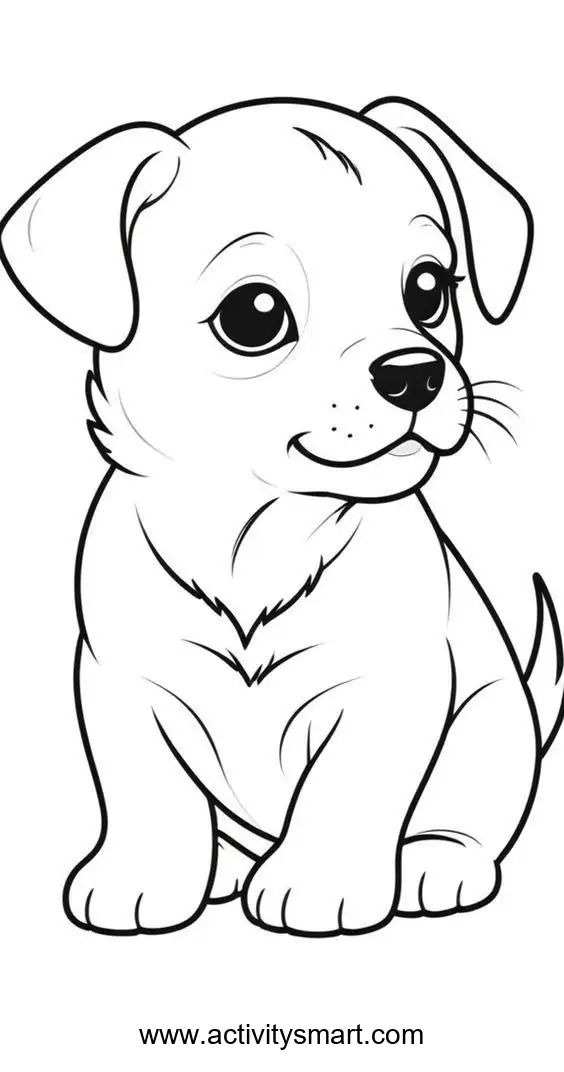
A floppy-eared puppy ready for color
This sitting puppy coloring page features a smiling puppy with large eyes, floppy ears and front paws resting close together. Open the original image, print a copy and choose colors for its coat, face and tail.
More Coloring Pages
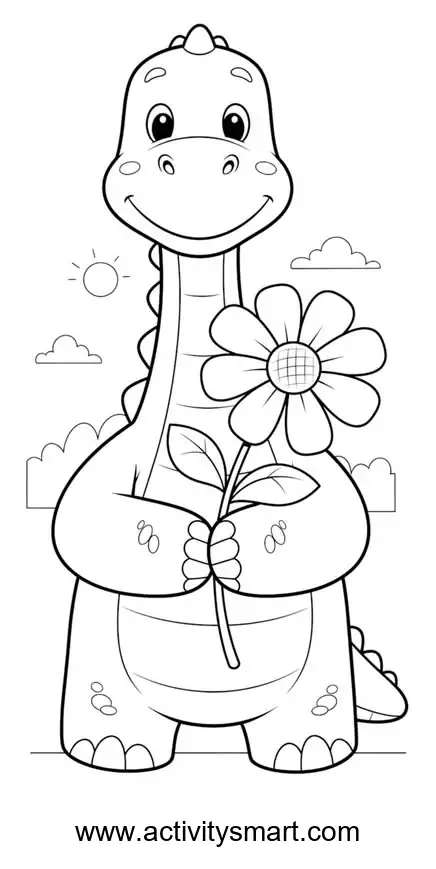
Dinosaur Holding a Flower Coloring Page
A smiling long-necked dinosaur holds a large flower. Open the printable image and try a picture-specific coloring activity.
View printable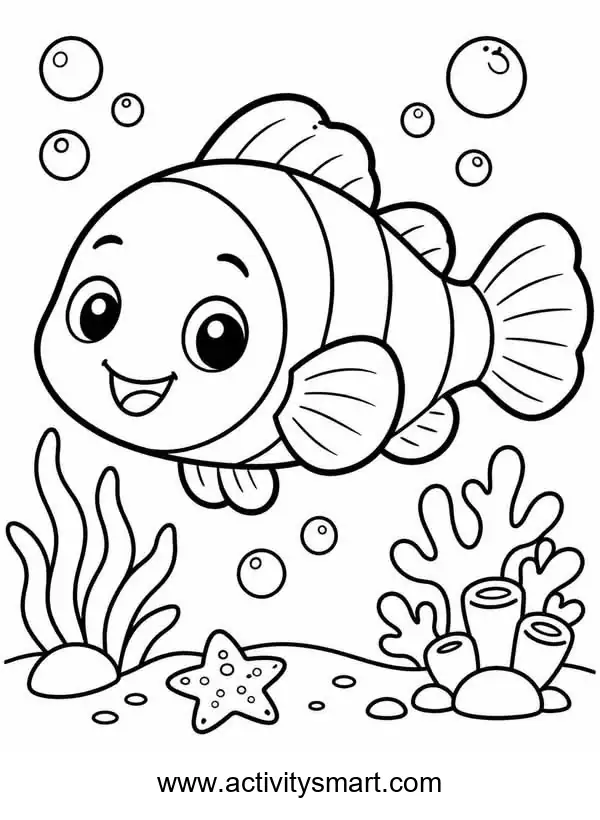
Fish among Bubbles Coloring Page
A smiling fish swims above aquatic plants with bubbles around it. Open the printable image and try a…
View printable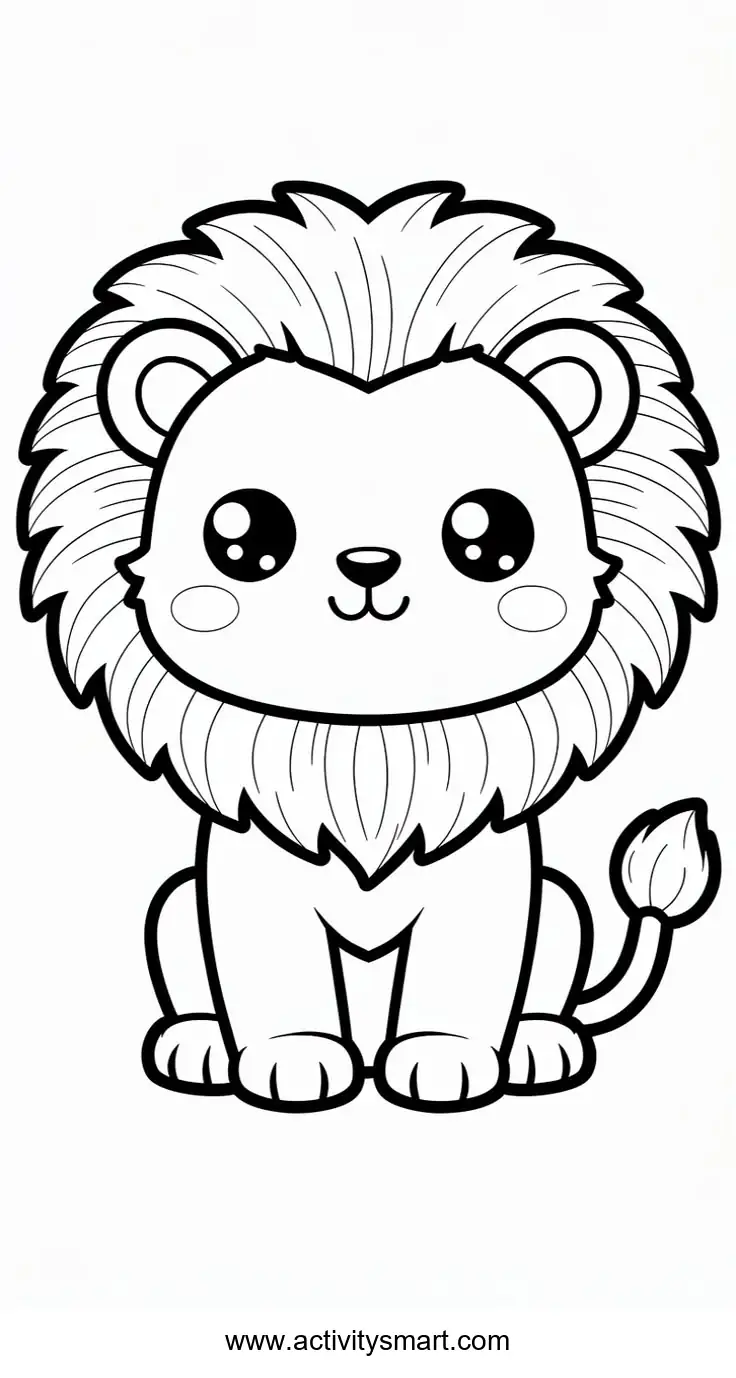
Round-Maned Lion Cub Coloring Page
A lion cub sits inside a large rounded mane. Open the printable image and try a picture-specific coloring…
View printable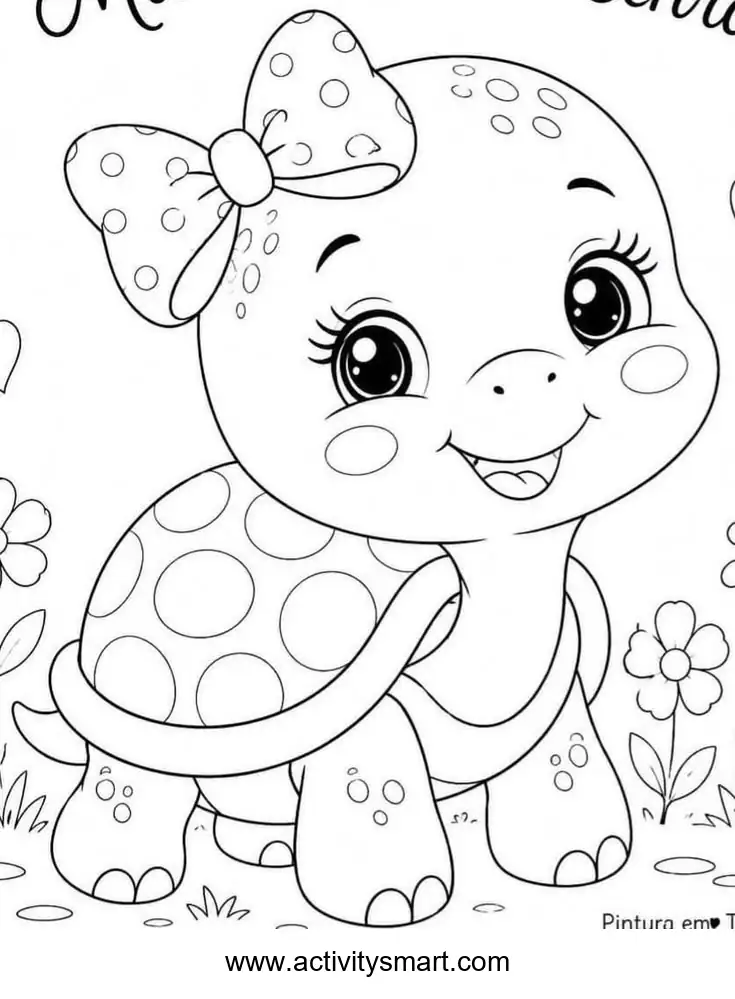
Turtle with a Bow Coloring Page
A smiling turtle wears a large bow beside flowers. Open the printable image and try a picture-specific coloring…
View printable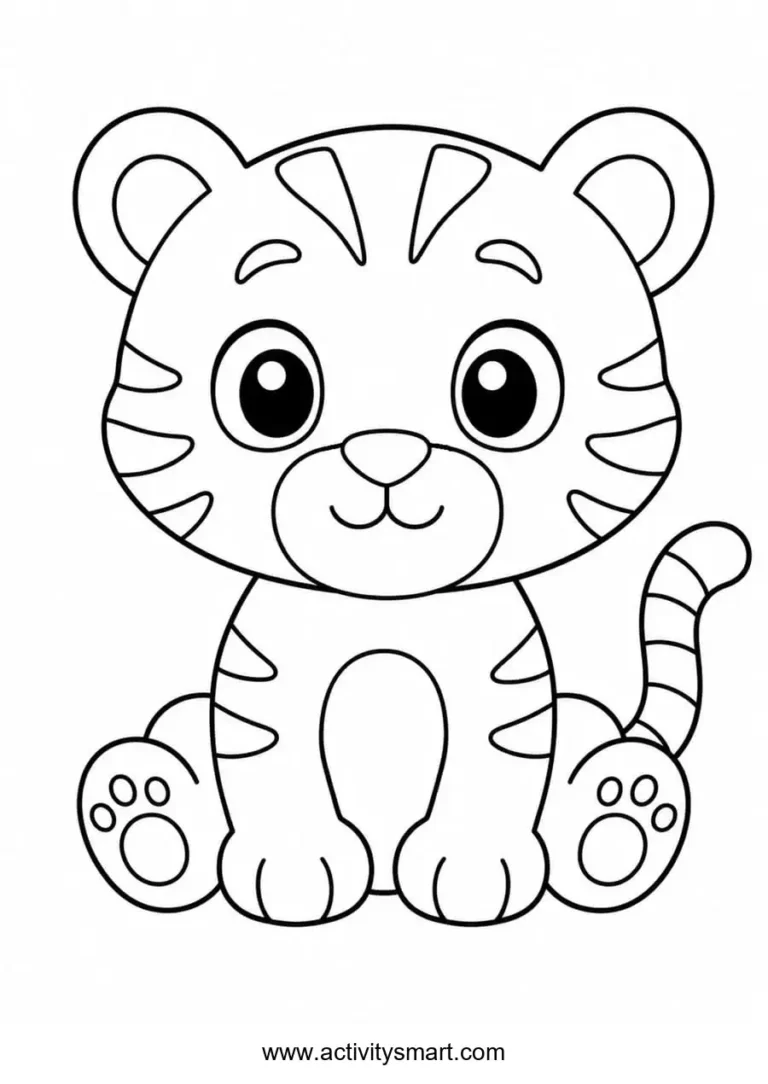
Sitting Tiger Cub Coloring Page
A round-faced tiger cub sits with bold stripes and a small smile. Open the printable image and try…
View printable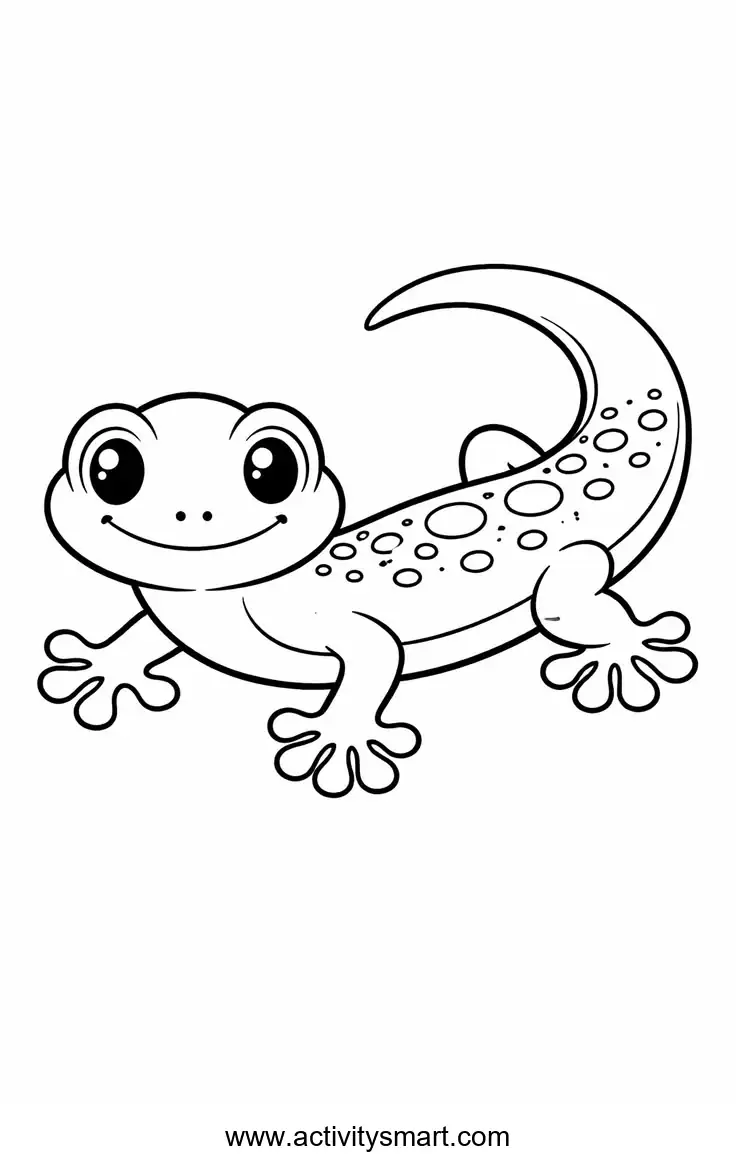
Spotted Gecko Coloring Page
A small spotted gecko has splayed toes and a curved tail. Open the printable image and try a…
View printable
Duck with Glasses and a Head Scarf Coloring Page
A duck wears round glasses and a tied head scarf. Open the printable image and try a picture-specific…
View printable
Turtle in a Cap Coloring Page
A smiling turtle wears a baseball cap and raises one front leg. Open the printable image and try…
View printableWhat is on this sitting puppy coloring page?
The picture shows one puppy sitting with its front paws close together. Its head is tilted slightly, and two floppy ears frame its face. Large eyes, a dark nose and a curved smile give the character its friendly expression. Short lines beside the muzzle suggest whiskers, while small marks above the nose add detail to the face.
Look below the head to find the pointed tufts on the puppy’s chest. Curved lines shape the front legs and toes, and the tail appears along one side of the body. There is open space around the character, with the website name printed beneath it. The original picture does not show a background scene or other animals.
Before coloring, invite your child to point to a detail they like. They might start with an ear, a paw or the fluffy chest. The large body areas offer room for broad strokes, while the face and toe lines give a chance to use a more careful touch. There is no need to finish the entire image in one sitting.
Four ways to enjoy the puppy picture
1. Plan a coat with a few colors
Choose a main shade for the puppy’s coat, such as tan, gray, brown or a favorite imaginary color. A lighter shade on the chest can make the pointed fur lines stand out. For a different look, leave the chest white and color the body lightly around it. Try each pencil on spare paper before deciding how dark to make the coat.
The ears can match the body or become a contrasting color. Your child could make both ears brown, use two different shades, or add a small patch to one ear. These patterns are additions to the drawing, so their shape and color are entirely up to the person holding the pencil. Color gently near the black outlines to keep the ears easy to recognize.
2. Compare the face and paws
Look closely at the large eyes and the smaller nose. Notice the white highlights already left inside the dark areas; your child can leave those marks visible. Compare the puppy’s rounded cheeks with the pointed tufts of fur on its chest. Which lines curve, and which come to a point?
Next, follow the outline of each visible paw with a finger just above the paper. Find the short lines that suggest toes, then compare those small marks with the broad shape of the legs. A colored pencil can be useful around the toe lines, while a crayon may be comfortable for filling the larger spaces. Pointing and looking are enough; the activity does not need a right answer.
3. Create a pattern and look for shapes
Add a few imagined spots or stripes to the puppy’s coat. Try sketching them lightly first, perhaps on the side of the body or on an ear. A small patch can use a darker version of the main coat color, or it can be bright purple or blue. Leave the face and chest lines clear if your child wants those details to remain easy to see.
After adding a pattern, ask your child to find and count the marks they drew, touching each one once. They can compare the sizes of their own spots or choose a favorite stripe. If they prefer the original plain coat, skip this step and use shading instead. The puppy can be colored in a single shade, several shades or just a few selected areas.
4. Give the puppy a name and a story
Imagine what the puppy might be thinking as it sits and smiles. Perhaps it is listening to a familiar voice or waiting for a game. These are invented ideas inspired by the expression; the picture itself does not show what happens next. Your child can choose a name and tell a short story using their own words.
Write the name or story on a separate sheet, or add a short caption in an empty area without covering the website name. If your child wants to draw a ball, a bed or a garden around the puppy, explain that these are new, imaginary details they are adding; those objects are not in the original picture. A second print can be colored differently and given a completely new story.
Start small: color one ear and one paw first. Your child can continue with the rest, take a break or leave some areas white.
How to save and print the puppy image
- Select Download Coloring Image to access the original WebP file. If it opens in the browser, use the browser’s save-image option.
- Select Print Coloring Page to use the site’s image-printing tool. If the tool or its window is blocked, open the full-size image and print it from your browser.
- Choose A4 or US Letter paper and portrait orientation. Select fit-to-page scaling and keep the original proportions.
- Check the preview for the complete puppy, tail and website name before printing a test copy.
The original image measures 564 × 1072 pixels. It is taller and narrower than a standard sheet of paper, so fitting the whole image may leave margins at the sides. Avoid stretching it to fill those margins: that would change the puppy’s proportions. Enlarging the file does not add detail and may make the outlines look softer; a smaller print may appear clearer.
Ordinary printer paper can be used with crayons or colored pencils. For markers, test the paper first and place a protective sheet underneath in case ink passes through. Choose supplies and any adult assistance to suit the child using them. A single test print lets you check the scale and sharpness before making another copy.
For another seated animal with prominent ears, visit the big-eared baby mouse coloring page. Compare the puppy’s floppy ears with the mouse’s round ears, or browse the coloring pages collection for another subject.
Questions about the puppy coloring page
What file does Download Coloring Image provide?
It provides the original WebP image measuring 564 × 1072 pixels. The image download is not a PDF.
Can I print the puppy on A4 or US Letter paper?
Yes. Choose portrait orientation and fit-to-page scaling, then check the preview to keep the complete image and website name visible without stretching or cropping.
Why is there white space beside the printed image?
The image is taller and narrower than A4 or US Letter paper. Side margins can appear when the complete picture is fitted to the sheet while preserving its proportions.
Which tools can I use for the puppy’s small details?
Colored pencils can help around the eyes, muzzle and toe lines. Crayons can cover larger areas of the coat. Test markers on spare paper and protect the surface underneath.