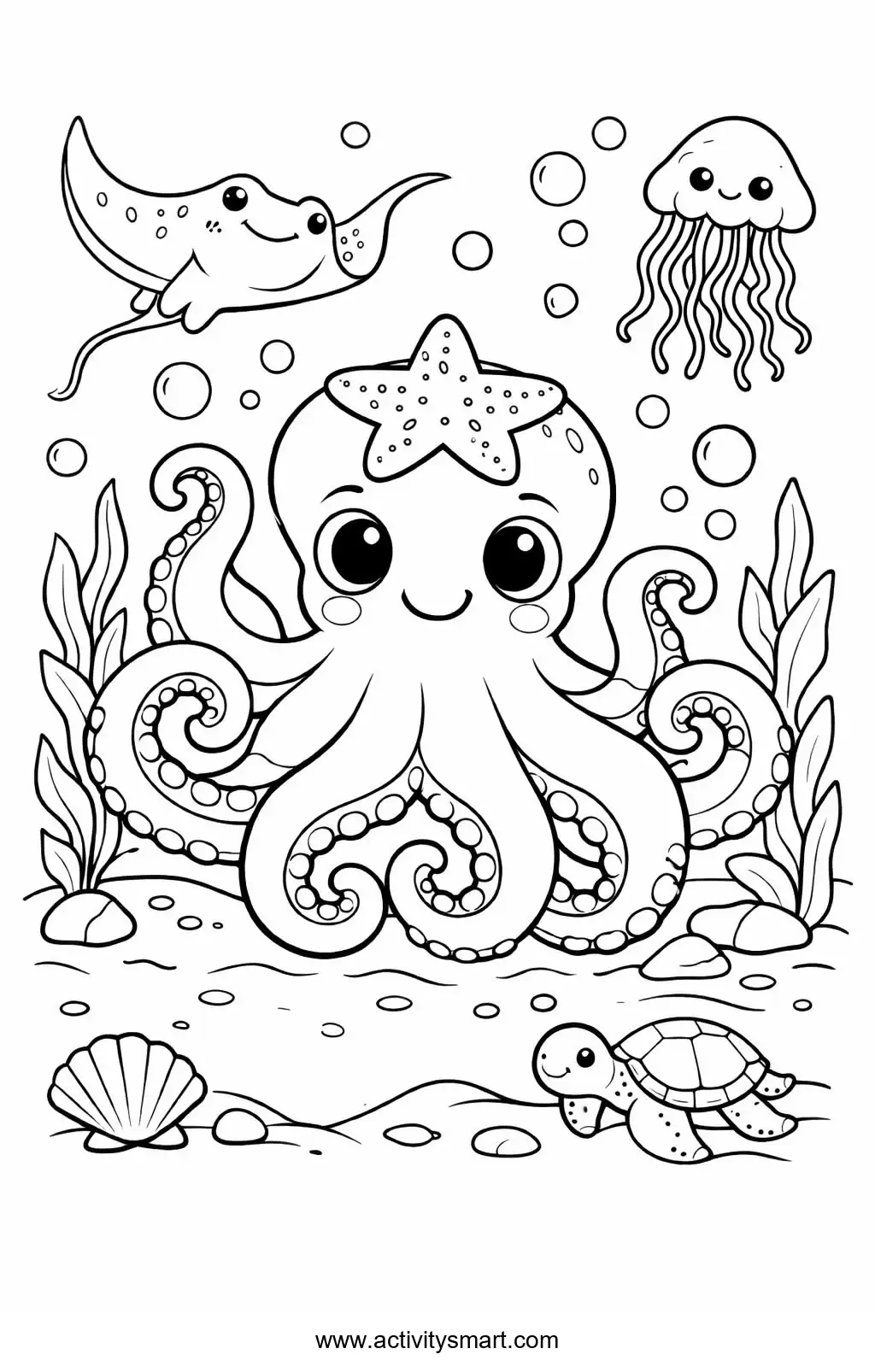
Explore the octopus and ocean animals picture
This octopus and ocean animals coloring page offers the original illustration to save or print, with ideas for coloring and observing its details.
More Coloring Pages
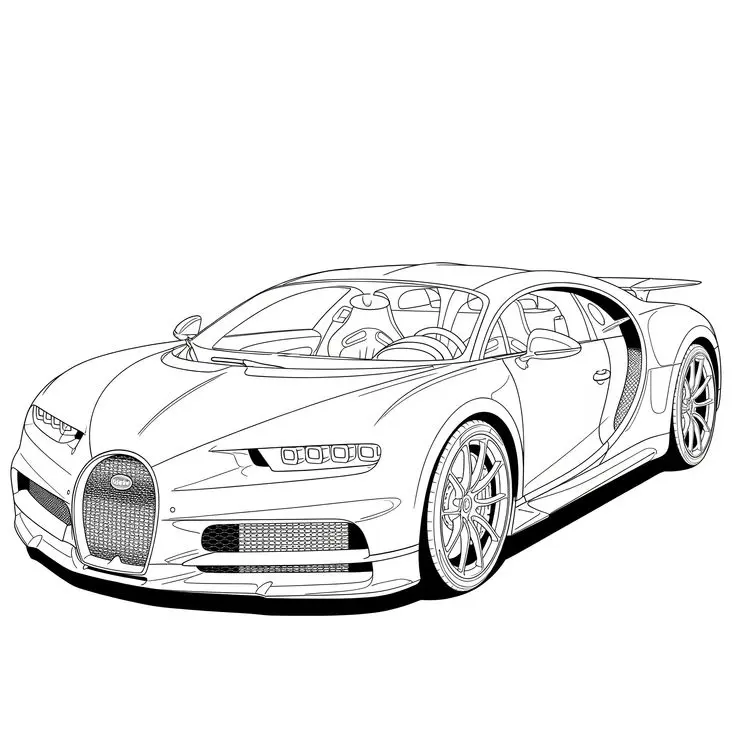
Bugatti Sports Car Coloring Page
Explore a detailed Bugatti sports car coloring page featuring a horseshoe grille, intricate wheels, visible cabin details, and…
View printable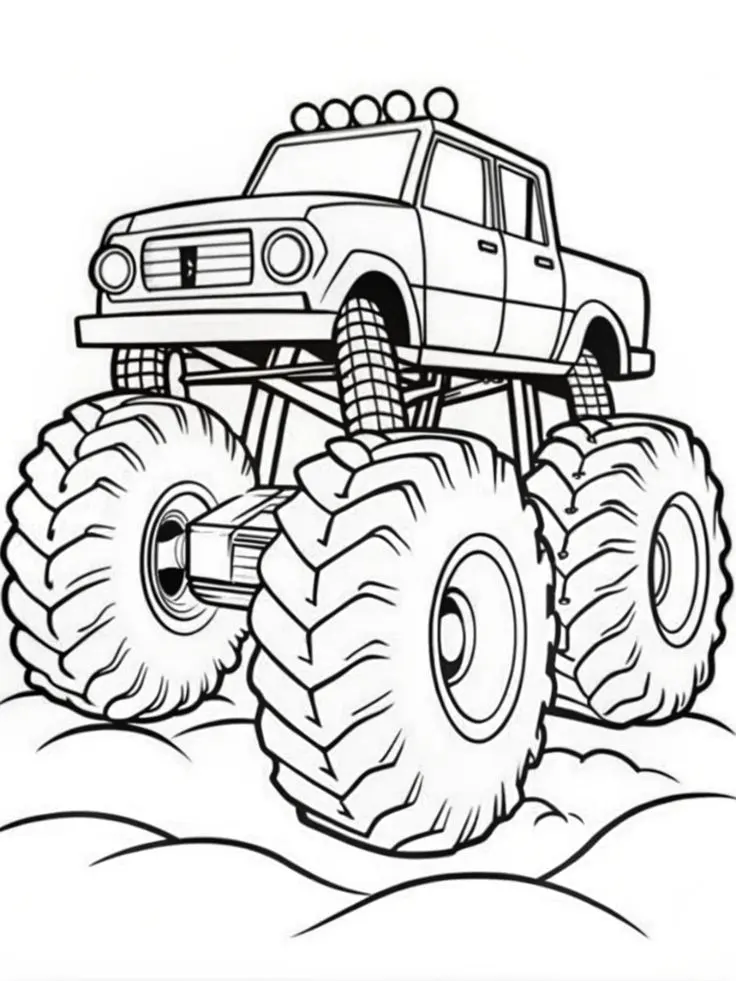
Monster Pickup Truck on Bumpy Ground Coloring Page
Color a towering monster pickup truck with giant treaded tires, exposed suspension, five roof lights, and rounded bumps…
View printable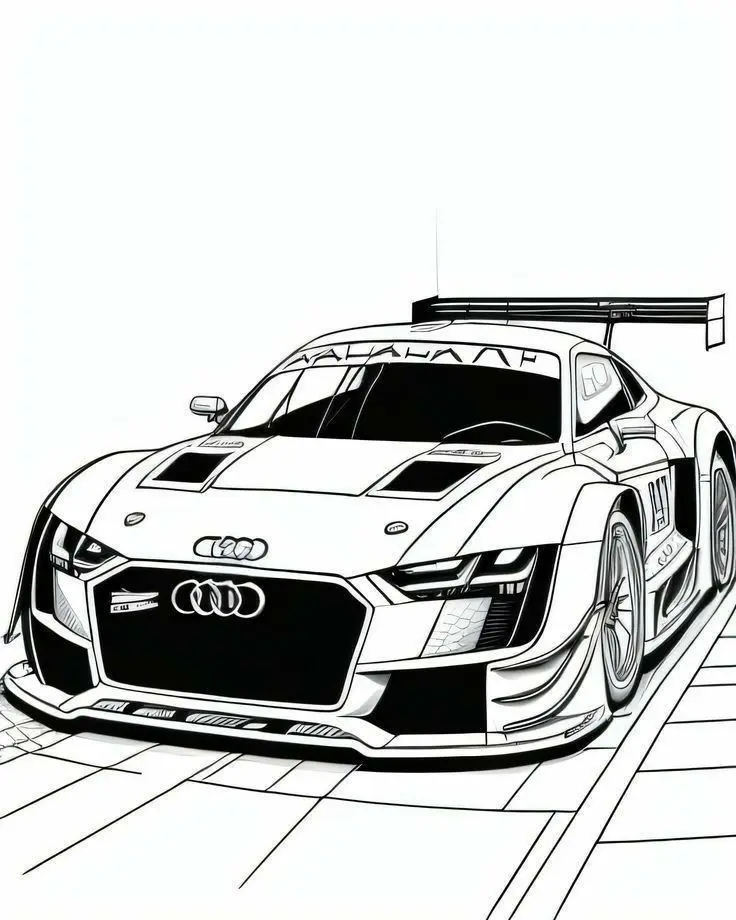
Audi Race Car with Rear Wing Coloring Page
Bring an Audi race car illustration to life with color. Explore its large rear wing, broad front grille,…
View printable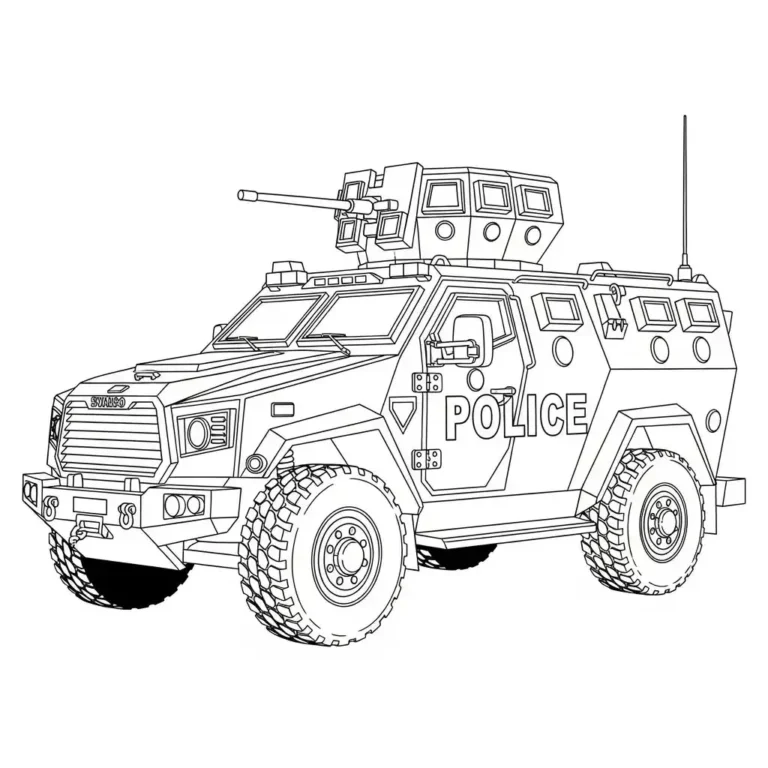
Armored Police Truck Coloring Page
Color a detailed armored police truck with large treaded tires, reinforced windows, a roof-mounted turret, and bold POLICE…
View printable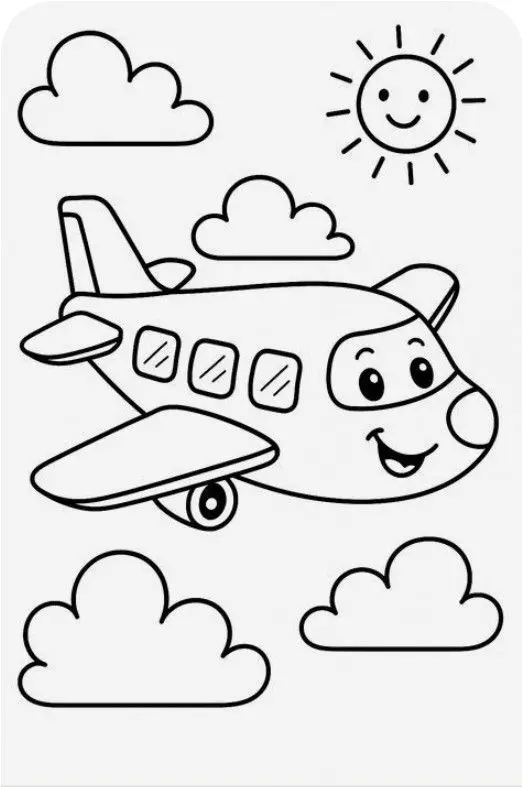
Smiling Airplane with Clouds and Sun Coloring Page
Color a cheerful cartoon airplane flying among four fluffy clouds beneath a smiling sun. Bold outlines and spacious…
View printable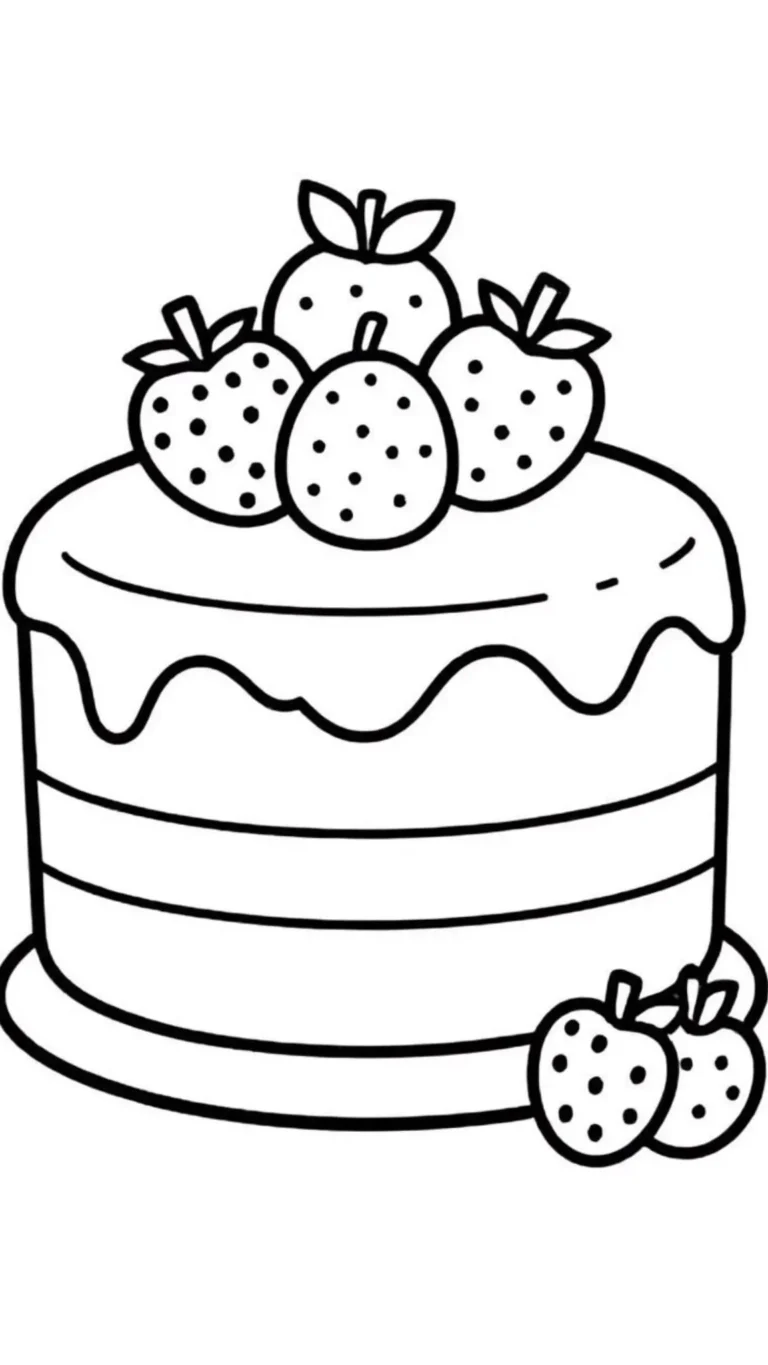
Strawberry Layer Cake Coloring Page
Decorate a strawberry layer cake with your own colors. Thick outlines define the dripping icing, horizontal layers, berry…
View printable
Cute Kitten in a Donut Coloring Page
Color a wide-eyed kitten sitting inside a large iced donut. Sprinkles, tiny paw pads, whiskers, and floating hearts…
View printable
Winged Strawberry Cake Coloring Page
Explore a whimsical cake coloring page with little wings, a smiling face, strawberry and cherry toppings, floating clouds,…
View printableExplore this octopus and ocean animals coloring page
A large smiling octopus fills the center. Its curling arms show rows of round suckers, and a spotted starfish rests on its head. A ray appears above on the left, a jellyfish on the right, and a small turtle near the bottom. Bubbles, sea plants, stones and a shell surround the characters.
Look at the complete image before choosing where to start. The main character has generous spaces for broad strokes, while the smaller shapes give you a chance to use a finer pencil. The black outlines can guide the coloring without requiring every space to be filled.
Point out what is actually drawn and ask which part catches your eye first. You can begin with that part, pause, and return another day. There is no requirement to complete the whole sheet. The website name at the bottom belongs to the original image and should remain visible.
Four ways to use the picture
1. Choose a palette for the octopus
Give the octopus one main shade and pick a second for the suckers. Follow each curling arm with a pencil, working outward from the body. The spotted starfish can contrast with the head beneath it, while a lighter pencil lets the tiny spots remain easy to see.
Before starting, try the colors on a spare sheet. Compare a light stroke with a firmer one and decide which leaves the printed lines easiest to see. Work slowly around the face or other small outlines; a light touch makes it easier to layer another color later.
2. Color the surrounding details
Assign a different color family to the ray, jellyfish and turtle. The ray has a broad winglike outline, the jellyfish has trailing tentacles, and the turtle has a divided shell. Use small strokes around those outlines before coloring the larger spaces.
Choose whether neighboring areas should match or stand apart. A repeated accent color can connect separate parts of the drawing, while contrasting shades make individual features easier to notice. You can leave some areas white if you like the way the picture looks.
3. Look closely and compare
Compare the octopus arms with the jellyfish tentacles, and find the turtle shell and the shell on the seabed. Ask a child to point to a round bubble and a curled arm. They can count visible bubbles or suckers on one arm, checking the drawing rather than relying on a preset number.
Try another short observation game: take turns pointing to a large area and a small area, then describe the difference in their shapes. Follow an outline with a finger without marking the paper. The goal is simply to notice what is there before deciding which section to color next.
4. Tell an imagined story
Imagine a conversation between the turtle and the octopus, or make up a name for the ray. These are invented stories inspired by the cartoon. A child could add an imagined submarine or another fish, making clear that it is their own addition to the original drawing.
Give the story a beginning and an ending, or choose just one sentence to describe the picture. An adult can write a dictated caption on a separate piece of paper. Another day, use a different palette and compare how the two versions feel. Each choice belongs to the person doing the coloring.
Saving and printing help
Select Download Coloring Image to access the original WebP. Some browsers display the image instead of saving it immediately; in that case use the browser’s save-image command. The Print Coloring Page control uses the site’s printing tool. If it does not respond, open the full-size image and use the browser’s print command.
Choose portrait orientation with A4 or US Letter paper and select fit to page. Preview the sheet before printing, making sure the entire picture and website name remain within the printable area. Preserve proportions instead of stretching the image. Printer margins and paper shape can leave some white space around the artwork.
The source image measures 1024 × 1606 pixels. Enlarging it does not add detail, so lines may appear softer at larger sizes. Try one sheet before making additional copies and adjust the scale if needed. Use paper supported by your printer; test markers on spare paper and place a protective sheet underneath.
For another picture, browse the coloring pages collection or explore the farm animals by a barn picture. You can compare the composition and choose the subject that interests you next.
Questions about this picture
What does the picture show?
A large smiling octopus fills the center. Its curling arms show rows of round suckers, and a spotted starfish rests on its head. A ray appears above on the left, a jellyfish on the right, and a small turtle near the bottom. Bubbles, sea plants, stones and a shell surround the characters.
What file does the download provide?
The original is a WebP image measuring 1024 × 1606 pixels. It is not a PDF.
How can I print the whole illustration?
Choose portrait orientation and fit to page on A4 or US Letter paper. Check the preview and retain the website name and full illustration without stretching.
Which coloring materials can I use?
Crayons can cover larger areas of the octopus; colored pencils give more control around the smaller details. Test markers on spare paper and protect the surface beneath.